Free Printable Colouring Pages - and Why Colouring Helps Early Reading
Printables
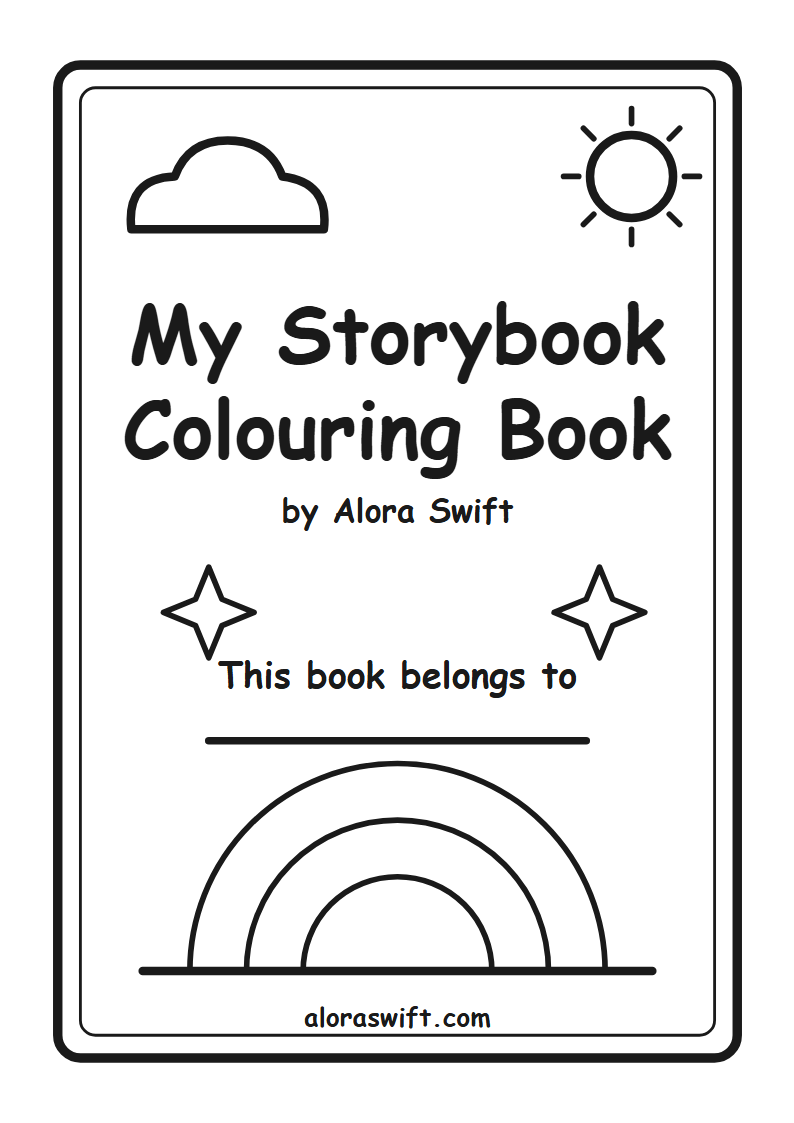
Download a free six-page colouring book - Cuddles the koala, Penny the platypus, a seven-band rainbow and a moon - plus why colouring helps early reading.
There is a particular kind of quiet that happens when a small child is colouring. It's not the same as the quiet in front of a screen. Their mouth keeps moving, and if you sit nearby with a cup of tea, you find out what they've been thinking about all day.
That's why I made a colouring book to go with my picture books - and why it's free. You can download the printable colouring book here; it's six A4 pages, and it prints perfectly in black and white.
What's inside
- The cover - a title page for them to colour and sign, which makes it theirs before they've drawn anything.
- Cuddles the koala - the lost koala bear from Cuddles Loses His Home, sitting in his gum tree.
- Penny the platypus - from Penny and the Silver Stream, in the water she spends most of the story trying to save.
- A rainbow - deliberately left empty, with seven separate bands to colour, so there's one for every colour they know the name of.
- A full moon - with a face and craters, for the child who wants to talk while they colour.
- A "The End" page - because finishing something and signing your name is a big deal when you're four.
Why colouring helps early reading
Colouring is not a filler activity that keeps children busy until they're ready for "real" reading. It quietly builds several of the things reading depends on.
Pencil grip and control. Holding a crayon and staying inside a line is the same small-muscle work as forming letters. Children who colour a lot tend to arrive at handwriting with less of a struggle.
Left to right, top to bottom. We read in a direction, and children have to learn that it's a rule. Filling in a picture, working across a page, is the gentlest possible rehearsal of it.
Naming things. Colouring invites talk: what colour is his nose? is the stream blue or green today? Every one of those exchanges adds a word, and vocabulary is the single strongest predictor of how easily a child learns to read.
Ownership of a character. This is the one I care about most. A child who has spent twenty minutes colouring Cuddles knows Cuddles. When you open the book that evening, they're not meeting a stranger - they're visiting someone they made. I've watched that turn a reluctant listener into the one asking for the story.
How to use them without it becoming a chore
Print one page at a time rather than all six - a stack of pages reads like homework. Let them choose which one. Sit nearby without supervising. And if they colour the platypus purple, the platypus is now purple; there's no wrong answer on a colouring page, which is exactly why it's restful for a child who gets corrected all day.
One more thing worth knowing: colouring is a conversation activity, not a silent one. The pages with fewer details - the moon, the rainbow - are the ones that tend to produce the best talk.
Where it fits
If you'd like the story that goes with the pictures, the children's picture books are here - and every one of them is written to be read aloud rather than read silently. The colouring book works as a companion, but it stands perfectly well on its own.
Print a page, put the kettle on, and see what they tell you.
Free to download, free to photocopy for a classroom or a playgroup - that's what it's for.